Holiday feature · Civic
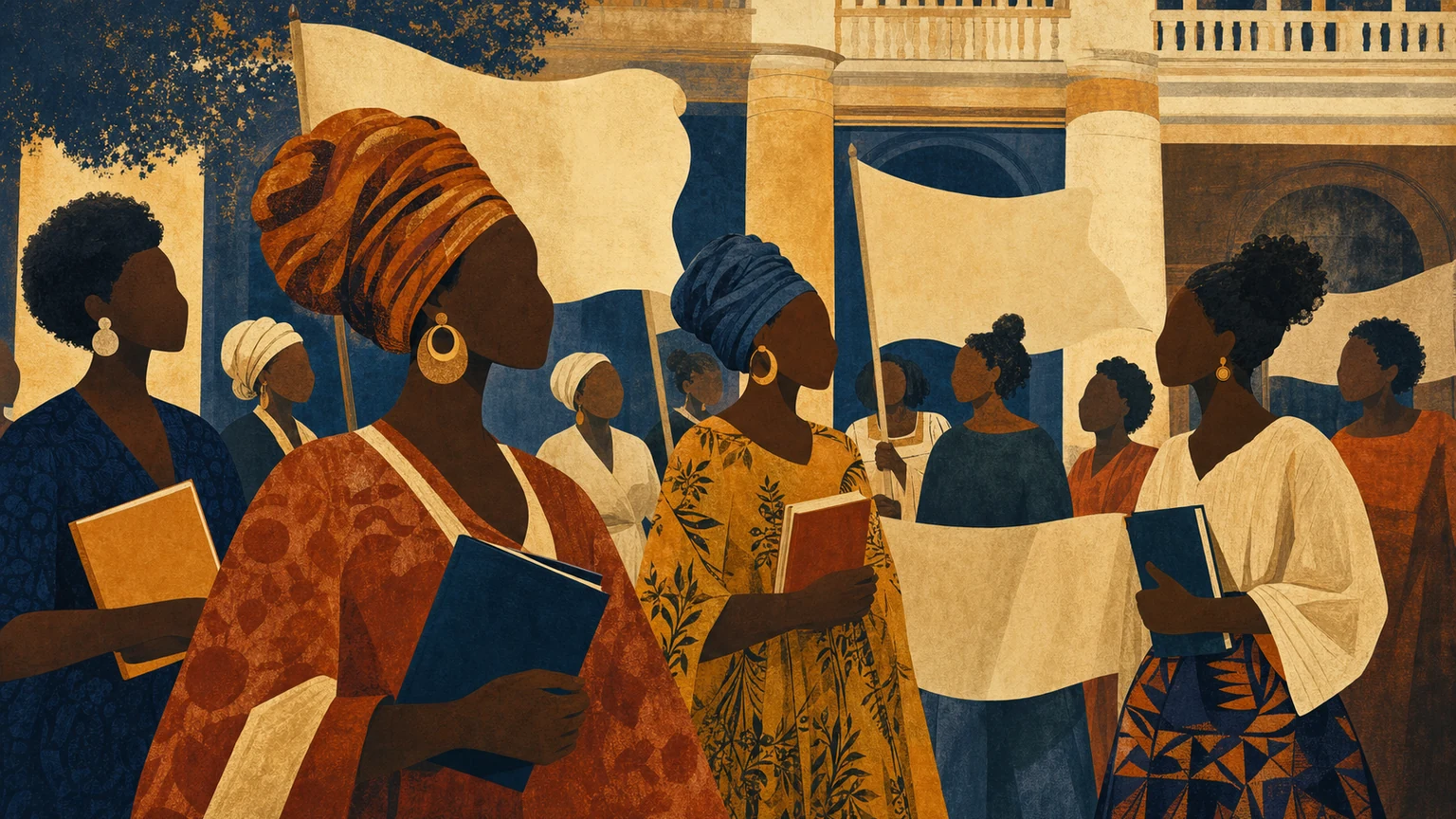
Afro-descendant women claim the public record
International Afro-descendant Women’s Day centers women whose lives and leadership are shaped where African descent and gender meet. July 25 asks whether schools, workplaces, cultural institutions, and public policy can see that experience clearly enough to change.
Observed
July 25
The international observance shares the date with constitutional, regional, religious, and festival calendars.
Public shape
Recognition and action
The day centers Afro-descendant women while directing attention toward equality and public participation.
What to notice
Specificity
Broad language can hide distinct experiences; the observance insists on naming them.
Calendar company
Puerto Rico, Galicia, Osaka
July 25 also carries Puerto Rico Constitution Day, Galicia’s national day, and Tenjin Matsuri.
Name the intersection
Afro-descendant women are often asked to fit inside categories that describe only part of their experience. International Afro-descendant Women’s Day names the intersection directly, keeping race and gender in the same public frame.
That specificity matters across different countries, languages, and communities. It does not suggest one uniform story; it makes room for lives that broad labels too easily flatten or overlook.
From credit to decision-making
Recognition becomes concrete in who receives credit, who is safe at work and in public, whose expertise is trusted, and who holds authority in schools, institutions, businesses, movements, and government.
The day therefore looks beyond ceremonial praise. It centers Afro-descendant women not only as subjects in the public record, but as people who write it, lead within it, and decide what happens next.
The test after the ceremony
A calendar date can gather attention, but the harder measure arrives afterward: whether institutions notice unequal barriers, whether leadership pathways widen, and whether public memory keeps more complete accounts of contribution.
July 25 places that test beside constitutional, regional, religious, and festival observances. Each asks a version of the same civic question: who belongs in the story, and who has the power to shape it?
More from July 25
Full edition
On this day
The first woman steps into open space
July 25 follows Svetlana Savitskaya outside Salyut 7 for the first spacewalk by a woman.
Full edition
Everything else on July 25
Return to July 25 for the full mix of observances, history, birthdays, food, and games.
Calendar
Browse July
Move outward from July 25 and follow the month’s changing civic, cultural, scientific, and seasonal record.