Holiday feature · Food
The coast serves lunch on the half shell
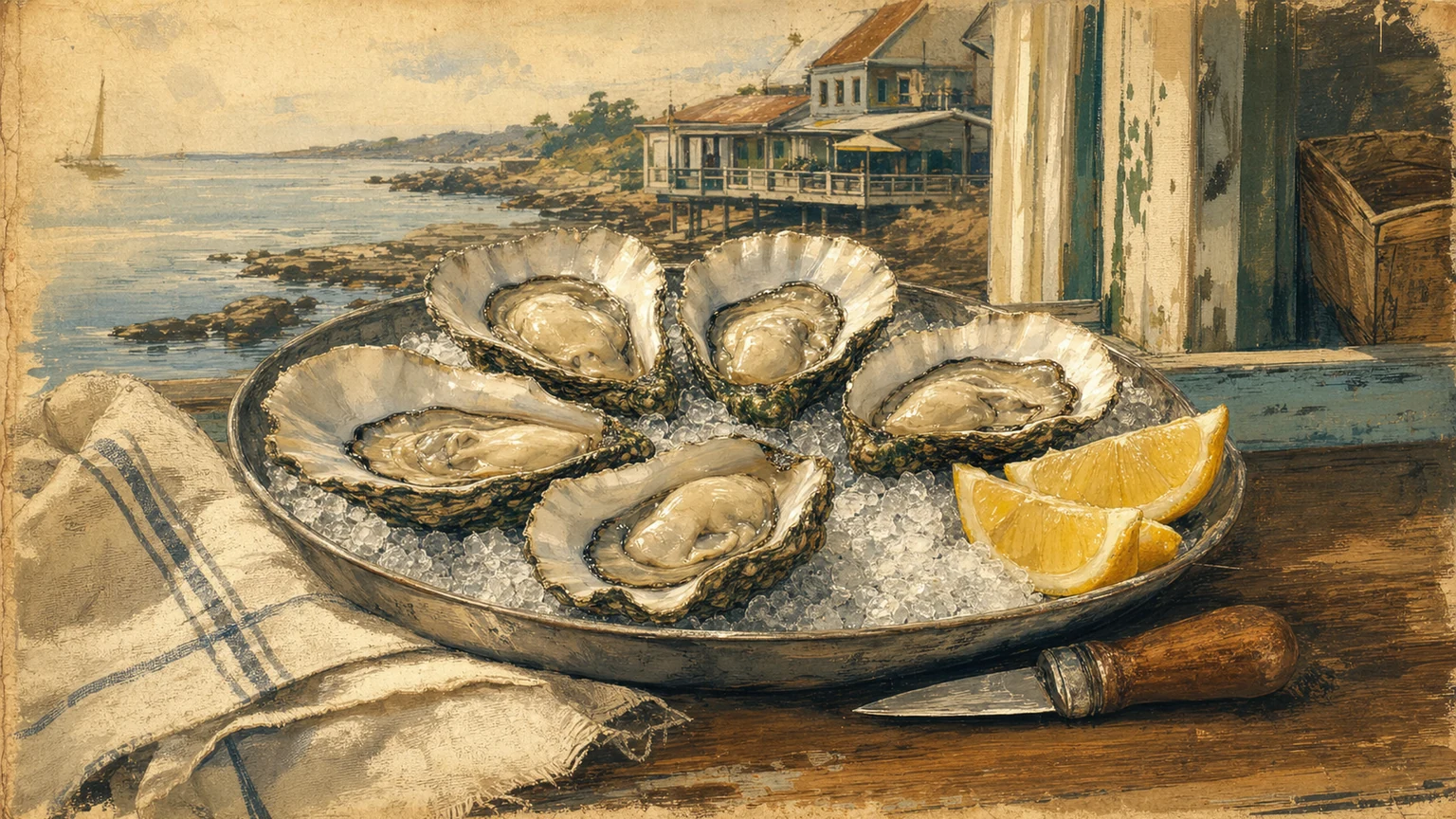
National Oyster Day gives August 5 to a food that tastes unmistakably of place. An oyster arrives with its coast attached: cold or warm water, a rough shell, a quick knife, and the briny argument over what belongs on top.
Observed
August 5
A summer date for oysters raw, roasted, grilled, or folded into regional dishes.
Habitat
Estuaries and coasts
Water temperature and salinity help give oysters their local character.
Tools
Glove and oyster knife
The shell demands a careful hinge, a steady hand, and respect for the blade.
At the table
Lemon or restraint
The oldest argument is often whether the oyster needs anything at all.
A mouthful of geography
Oysters are often described by flavor, but place gets there first. The water in which they grow shapes the bite, giving a shellfish counter the logic of a map.
That is why menus name bays, rivers, coves, and islands. The oyster is introduced by its address before it reaches the plate.
The small ceremony of opening
A closed oyster gives nothing away. The shucker finds the hinge, protects the hand, and turns resistance into a clean half shell.
The ritual is practical but theatrical enough for a holiday: knife, twist, lid, liquor, lemon. Lunch appears one stubborn shell at a time.
What belongs on top
Some diners add mignonette, hot sauce, or citrus. Others consider any addition an interruption.
National Oyster Day need not settle the matter. It only needs a cold tray, a safe knife, and enough coast in the room to begin the debate.
More from August 5
Full edition
On this day
The tape that emptied the room
The August 5 archive listens as the “Smoking Gun” tape changes the political count in Washington.
Full edition
Everything else on August 5
Return for independence observances, oysters, the Watergate tape, birthdays, and Wednesday’s games.
Calendar
Browse August
Browse onward from a half shell and a reel of tape that changed Washington.