On this day · archive
Desmond Tutu enters Cape Town's bishop's chair
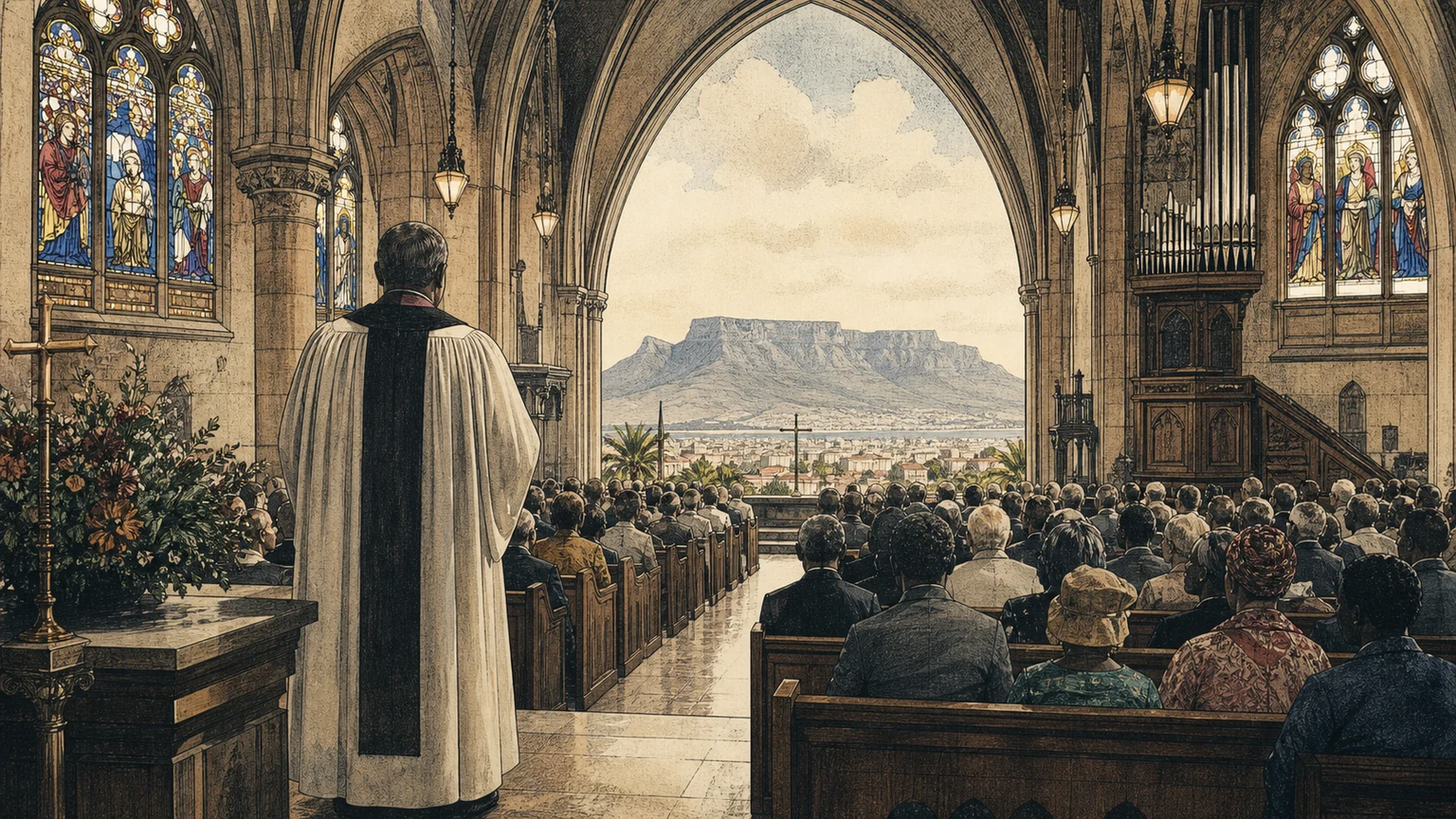
On September 7, 1986, Desmond Tutu became the first Black man to lead the Anglican Diocese of Cape Town. A church appointment became a public breach in the architecture of apartheid.
8
events in todayish file
1986
Desmond Tutu becomes the first Black man to lead the Anglican Diocese of Cape Town.
His installation placed a Black anti-apartheid voice at the head of the diocese while South Africa’s racial order still claimed authority over public life.
Desmond Tutu’s installation on September 7, 1986, was a church event with consequences well beyond the cathedral. He became the first Black man to lead the Anglican Diocese of Cape Town, entering its highest office under a state built on racial separation.
The appointment did not end apartheid or place Tutu beyond its reach. It made the contradiction harder to hide: a Black archbishop speaking with institutional authority in a country whose laws denied equal standing to its Black majority.
A first can be mistaken for a finish line. This one was better understood as an opening — a seat occupied, a barrier broken, and a public voice given a larger room from which to insist that the national order could not last.
The full record
8 entries from the day’s archive, filed year by year with a note on what each one leaves behind.
The National Unity Government of Myanmar declares a people's defensive war against the military junta during the Myanmar civil war.
The declaration escalated resistance to Myanmar’s military junta into open conflict.
Conflict
Ukrainian filmmaker Oleg Sentsov and 66 others are released in a prisoner exchange between Ukraine and Russia.
The exchange returned prisoners across the Russia–Ukraine divide.
Diplomacy
The 8.2 Mw 2017 Chiapas earthquake strikes southern Mexico, killing at least 60 people.
The Chiapas earthquake killed at least 60 people in southern Mexico.
Disaster
Canada officially cuts diplomatic ties with Iran by closing its embassy in Tehran and orders the expulsion of Iranian diplomats from Ottawa, over nuclear plans and purported human rights abuses.
Canada’s embassy closure severed formal diplomatic relations with Iran.
Diplomacy
Egypt holds its first-ever multi-party presidential election.
Egypt’s election introduced multiple presidential candidates to the ballot.
Elections
Space Shuttle Endeavour is launched on STS-69, the second flight of the Wake Shield Facility.
Endeavour carried the Wake Shield Facility on its second flight.
Space
Desmond Tutu becomes the first black man to lead the Anglican Diocese of Cape Town.
Tutu’s appointment broke a racial barrier in Cape Town’s Anglican leadership.
Civil rights
Vietnam Television is established.
The broadcaster began a national television institution in Vietnam.
Television