On this day · archive
The horse that made the stretch feel measured
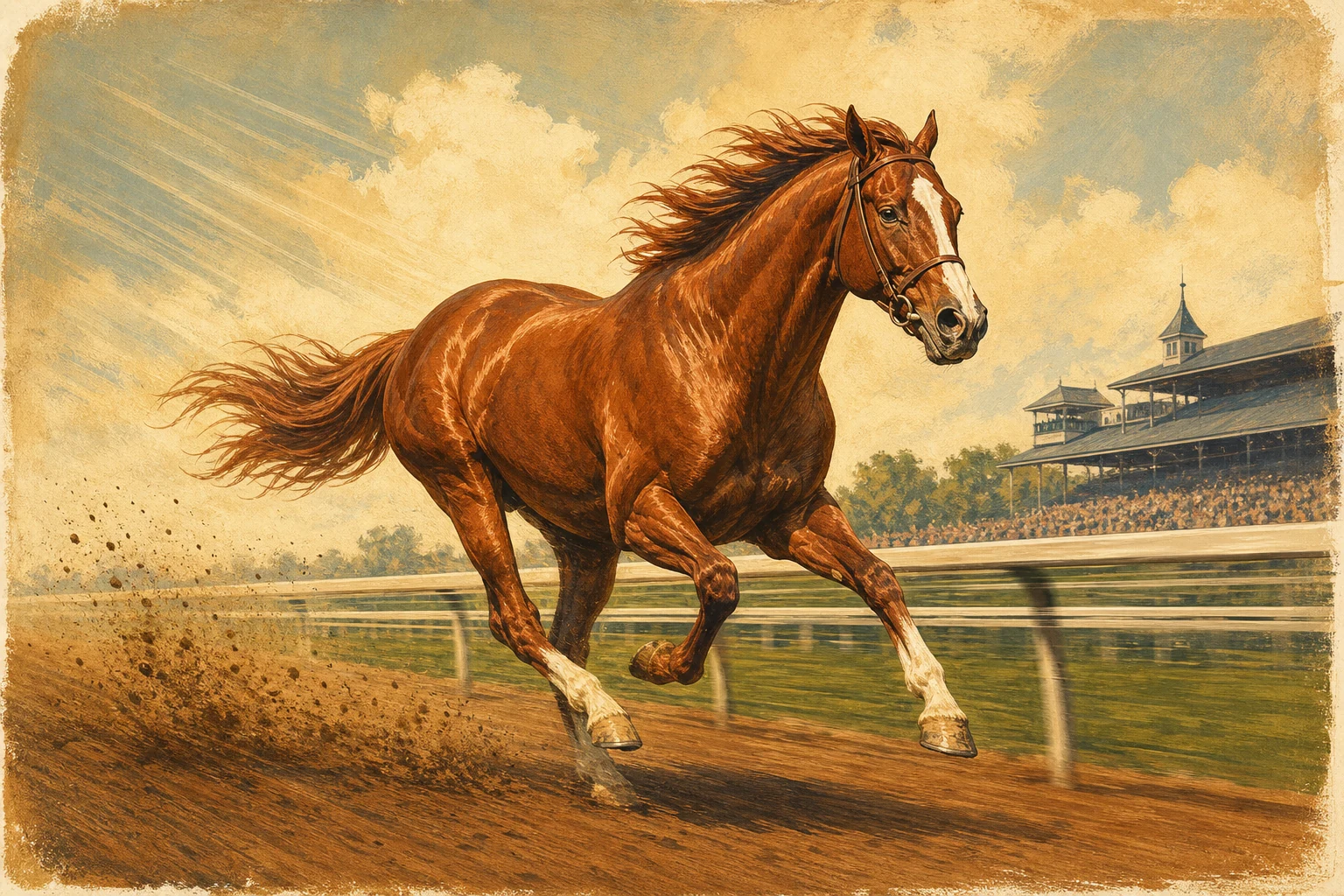
June 9 keeps bombings, religious policy, sport, military technology, aviation, and revolution in its record. Secretariat’s 1973 Triple Crown gives the day a line of motion that still reads like a clean break from the field.
8
events in todayish file
1973
In horse racing, Secretariat wins the U.S. Triple Crown.
The record is only nine words long, but it carries a whole grandstand: horse, homestretch, timing, and the rare feeling of a finish already becoming memory.
The archive writes it with unusual economy: In horse racing, Secretariat wins the U.S. Triple Crown. No margin is needed for the sentence to hold its shape. The achievement names the horse and the crown, and the calendar supplies the date.
Sports history often turns on numbers, but some records also keep a physical image. Here it is a horse in motion, the rail bending past, the field becoming background, and a crowd learning that it is watching not merely a victory but a measure.
Around it, June 9 is a serious ledger of violence, peace, policy, resignation, and military machinery. Secretariat’s entry does not lighten the day so much as change its stride: from blast and treaty to the exacting drama of a finish line.
The full record
8 entries from the day’s archive, filed year by year with a note on what each one leaves behind.
A suicide bombing at a wedding party in Arghandab, Kandahar, kills at least 40 people and wounds more than 70.
The archive records private celebration broken by public violence, with the human count carrying the weight of the entry.
Violence
An explosion at a hotel in Peshawar, Pakistan, kills 17 people and injures at least 46.
A place of transit and shelter becomes the scene of loss, another urban blast added to the date’s record.
Violence
Two bombs explode at a train station near Algiers, Algeria, killing at least 13 people.
The day’s violent ledger moves through ordinary infrastructure: a station, a route, and a public morning altered by blast.
Violence
The Church of Jesus Christ of Latter-day Saints opens its priesthood to “all worthy men,” ending a 148-year policy that excluded Black men.
A religious institution changes a long-standing rule, leaving the date marked by doctrine, race, and institutional memory.
Civil rights
Secretariat wins the U.S. Triple Crown in horse racing.
The sports record keeps its power through compression: one horse, three races, and a finish that remains easy to name.
Sports
The USS George Washington is launched as the first nuclear-powered ballistic missile submarine.
A vessel enters the water with Cold War consequence, joining propulsion, missile strategy, and submerged deterrence in one launch.
Military technology
Charles Kingsford Smith completes the first trans-Pacific flight in the Southern Cross, a Fokker Trimotor monoplane.
The aviation entry gives the date an ocean-crossing line, where endurance and navigation turn distance into a completed route.
Aviation
Abu Muslim Khorasani begins an open Abbasid revolt against Umayyad rule under the sign of the Black Standard.
The oldest entry in the day’s record opens a revolutionary thread, where banner, movement, and dynasty begin to shift together.
Revolution