Holiday feature · Season
The sun returns by stone and ceremony
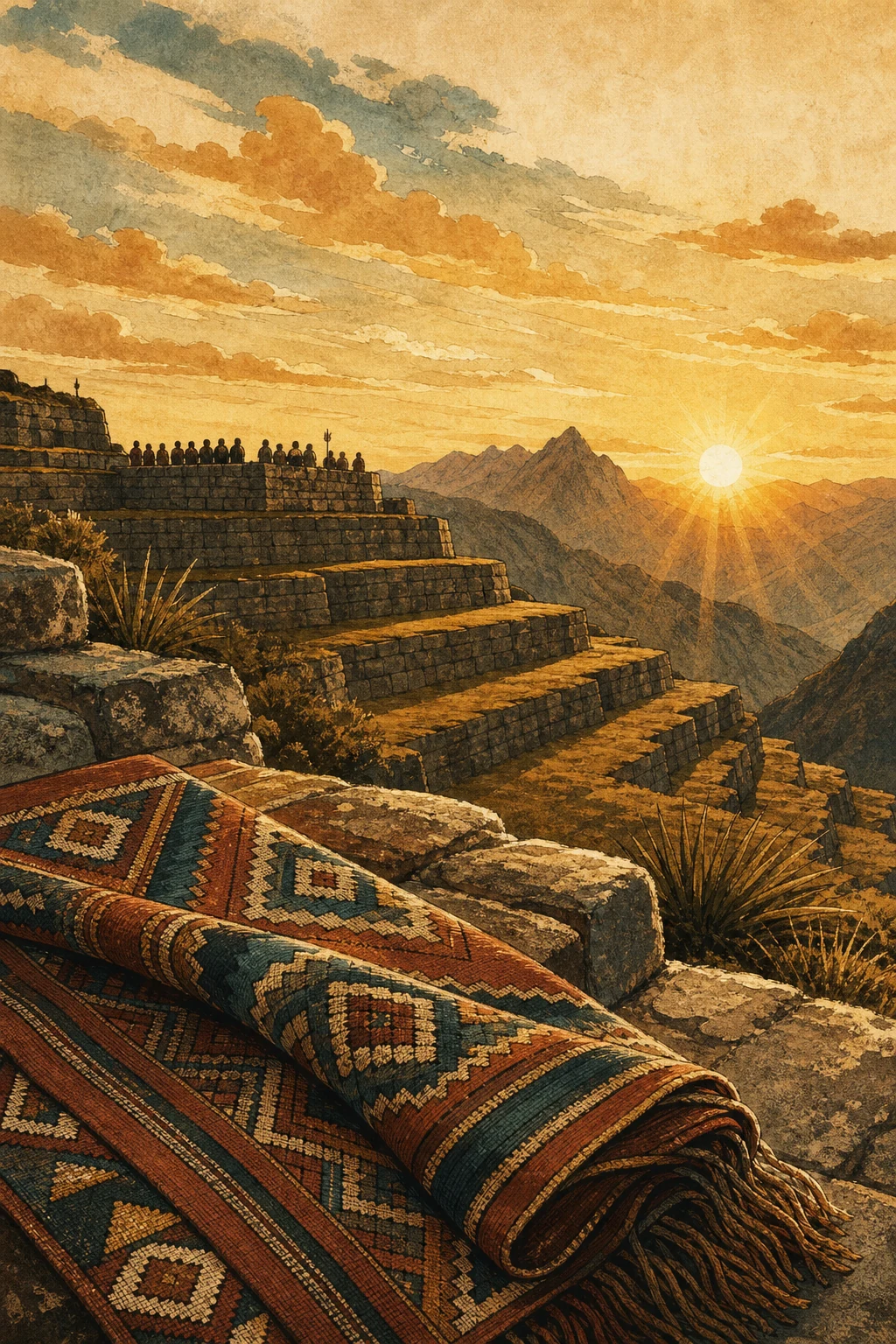
Inti Raymi places a New Year in the cool hinge of the Southern Hemisphere, where winter light, stone terraces, and public ritual make the calendar feel ancient and exact.
Observed
June 24
The observance appears on the June 24 calendar.
Place
Sacsayhuamán
Sacsayhuamán gives the festival altitude, stone, and the public gravity of a place built to hold memory.
Calendar company
Army Day or Battle of Carabobo Day, Bannockburn Day, Day of the Caboclo
Battle days, midsummer customs, regional identity, and Amazonian remembrance keep history and season close by.
At stake
Season
Seasonal return is the central stake: winter light becoming a public promise rather than a private mood.
Winter light in the high place
Inti Raymi gives June 24 a different seasonal logic. In the Andes of the Southern Hemisphere, the winter solstice is not an ending but a turn: low sun, stone, altitude, and the old confidence that light can return on schedule.
The festival’s power is concrete. It belongs to terraces, plazas, woven cloth, bodies gathered in cold brightness, and a calendar older than the modern page carrying it.
A new year made of return
New Year observances often imagine a clean break. Inti Raymi is more circular: the sun comes back, the season shifts, and continuity is the ceremony.
That rhythm gives the date its grandeur without needing decoration. The central metaphor is not fireworks but orbit — a public promise made by light itself.
What stone remembers
Sacsayhuamán matters because place holds memory differently than print. Stone makes the observance feel less like an item and more like an inheritance.
On June 24, the calendar becomes architectural: a set of steps where season, history, and public ceremony meet.
More from June 24
Full edition
On this day
The last tortoise in the ledger
June 24 carries insurrection, collapse, law, bridges, rail disaster, cinema money, and political firsts.
Full edition
Everything else on June 24
Return to the daily Gazette for observances, history, birthdays, recipe, games, and the rest of the date.
Calendar
Browse June
Move through late June and watch the month shift between ceremony, law, science, sport, and public memory.