Holiday feature · National day
A national day with an older name in its pocket
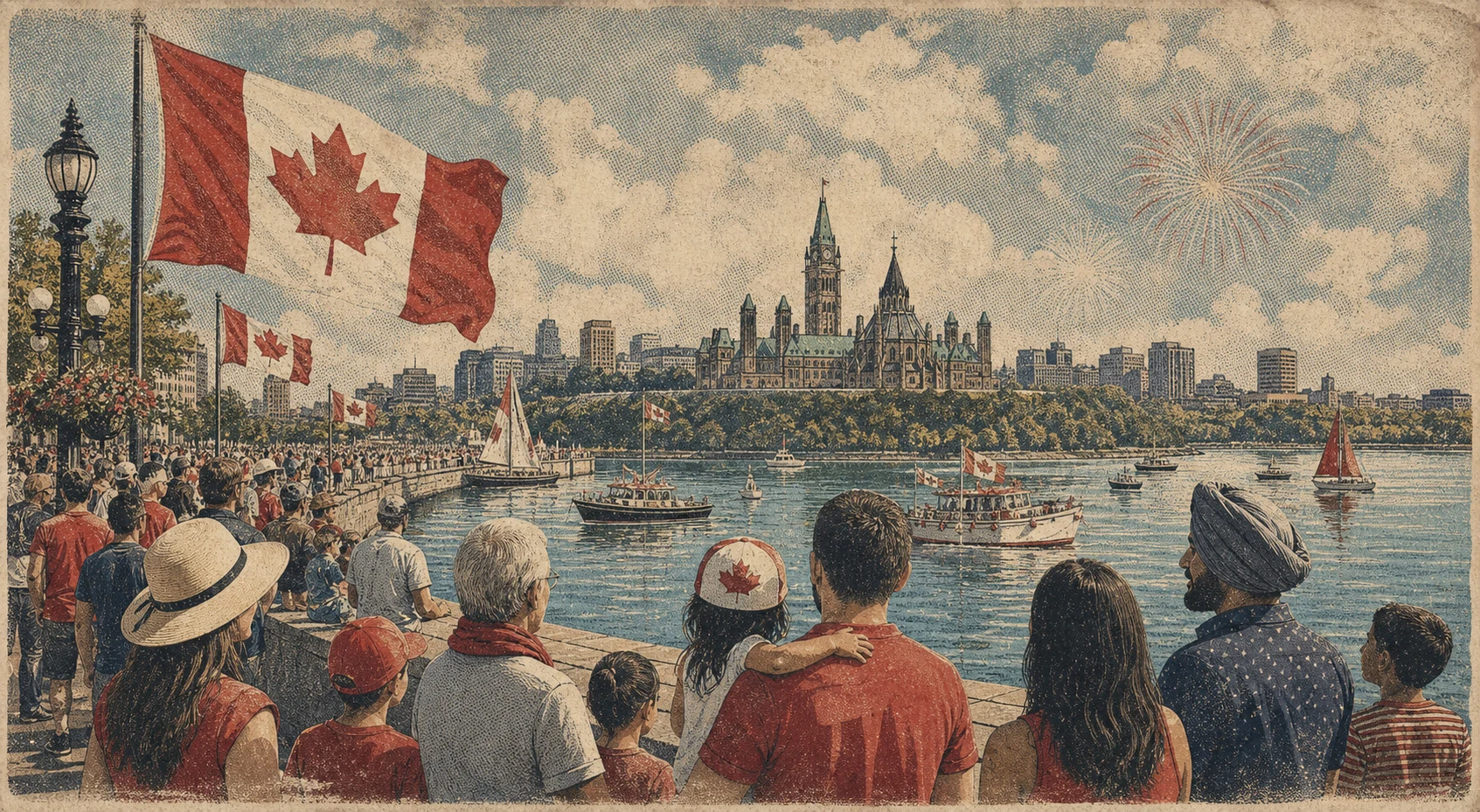
Canada Day arrives carrying its former title, Dominion Day, inside the line. The holiday is national ceremony, summer weather, and a reminder that countries keep revising how they introduce themselves.
Observed
July 1
The holiday is listed as Canada Day, formerly Dominion Day.
Tone
National ceremony
The day carries public celebration alongside historical naming and memory.
Calendar company
Singapore, China, Pakistan, Hungary
July 1 also marks armed forces, party founding, children, and civil-service observances.
What to notice
The former name
The parenthetical matters: national days often carry earlier political language with them.
The parenthetical holiday
Canada Day, formerly Dominion Day: the raw line already contains a small history lesson. The current name holds the ceremony; the former name reminds the reader that national language changes over time.
That makes the day more interesting than bunting alone. A country’s public holiday is also a mirror, showing what the nation now says about itself and what it used to say.
Summer ceremony, historical shadow
July 1 has the easy weather of a summer national day: gatherings, flags, public spaces, a certain civic brightness. But national holidays are never only weather.
They ask citizens and visitors to decide what kind of memory belongs in the celebration — pride, critique, gratitude, grief, and all the uneven work of belonging.
A name in motion
The old title does not cancel the present one. It gives it depth, like a previous headline visible beneath fresh ink.
That is the useful work of the date: to celebrate without pretending the calendar was born yesterday.
More from July 1
Full edition
On this day
A court for crimes too large for silence
July 1’s archive follows the International Criminal Court into a day of parliaments, networks, radio, and remembrance.
Full edition
Everything else on July 1
Return to the full July 1 edition for Canada Day, companion observances, birthdays, food, and the day’s Gazette miscellany.
Calendar
Browse July
Open July with national ceremonies, institutions, and the first turns of a new month.