Holiday feature · Civic
A nation marks freedom by planting
Niger’s August 3 joins independence from France in 1960 with Arbor Day. The pairing gives sovereignty a living symbol: not only a flag and anniversary, but a tree placed in difficult ground for a future beyond the ceremony.
Observed
August 3
Niger marks its 1960 independence from France.
Paired observance
Arbor Day
Tree planting gives the national anniversary a practical public ritual.
Landscape
The Sahel
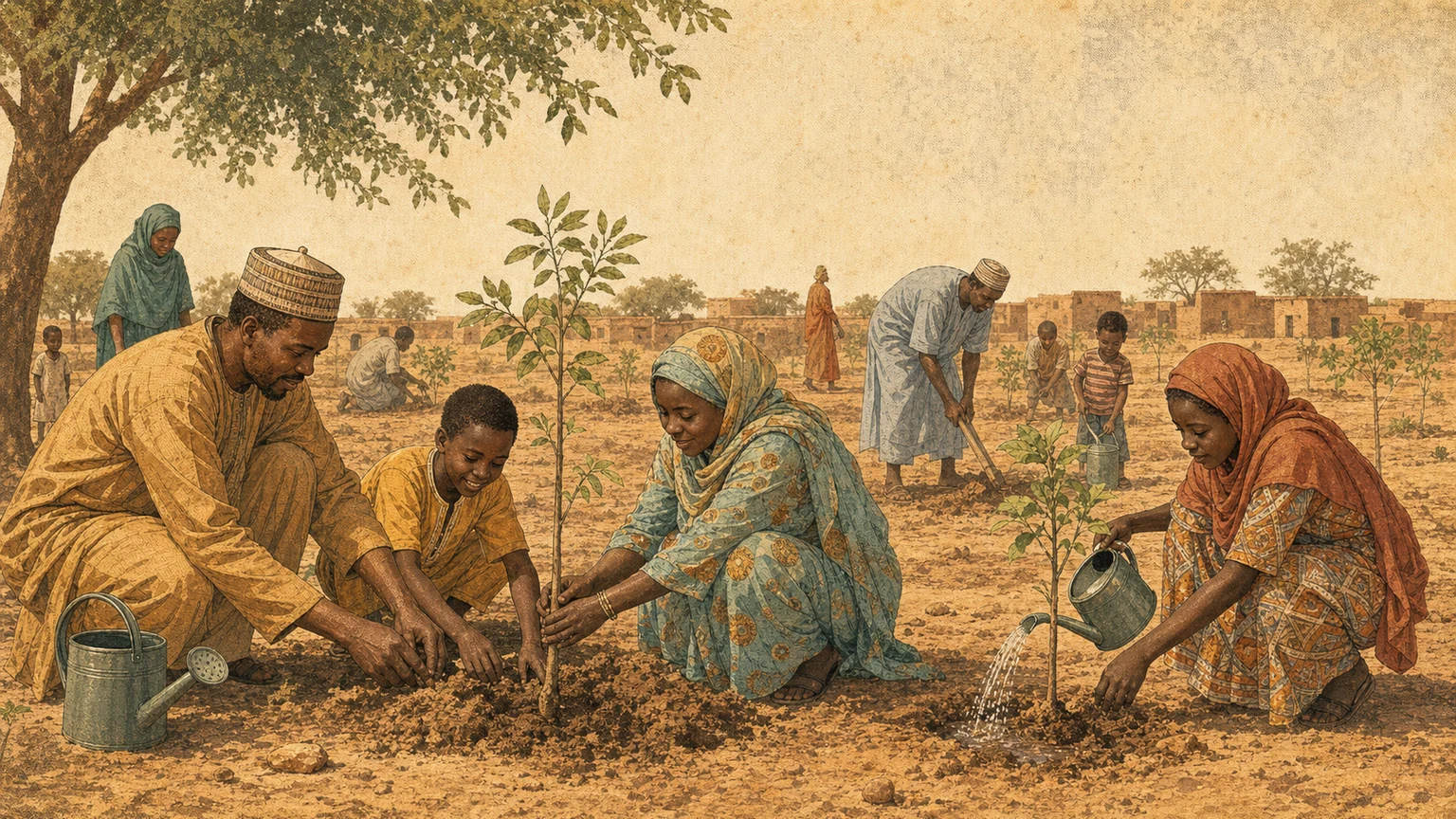
A young tree makes care, water, and endurance visible.
Central image
Roots
Political freedom and environmental stewardship meet in the same patch of earth.
Two meanings in one date
August 3 commemorates Niger’s independence from France in 1960. It is also Arbor Day, making the national anniversary unusually tangible.
One observance looks to political sovereignty; the other asks what can be made to grow. Together they give the day both a historical threshold and a shovel.
A ceremony with roots
A planted tree is not a quick monument. It requires water, protection, and years of attention before it offers dependable shade.
That slowness suits a national anniversary. Independence establishes a date, but the life of a country continues through repeated acts of care long after the declaration.
The future in the ground
In the Sahel, a tree is a concrete image rather than a decorative one. Soil, heat, and water determine whether the gesture survives.
August 3 makes the future visible at sapling scale. The public ritual is hopeful, but it is also work.
More from August 3
Full edition
On this day
Under the ice, a new route
The August 3 archive follows USS Nautilus beneath the ice at the geographic North Pole.
Full edition
Everything else on August 3
Open the full edition for Niger’s national day, watermelon, floods, birthdays, and Monday’s diversions.
Calendar
Browse August
Follow the month from a planted tree toward the observances and histories ahead.