Holiday feature · Civic
The ballot and the work beyond it
Women’s Equality Day marks the certification of the Nineteenth Amendment in 1920. The anniversary honors a constitutional change while keeping sight of the unequal access that persisted after the text changed.
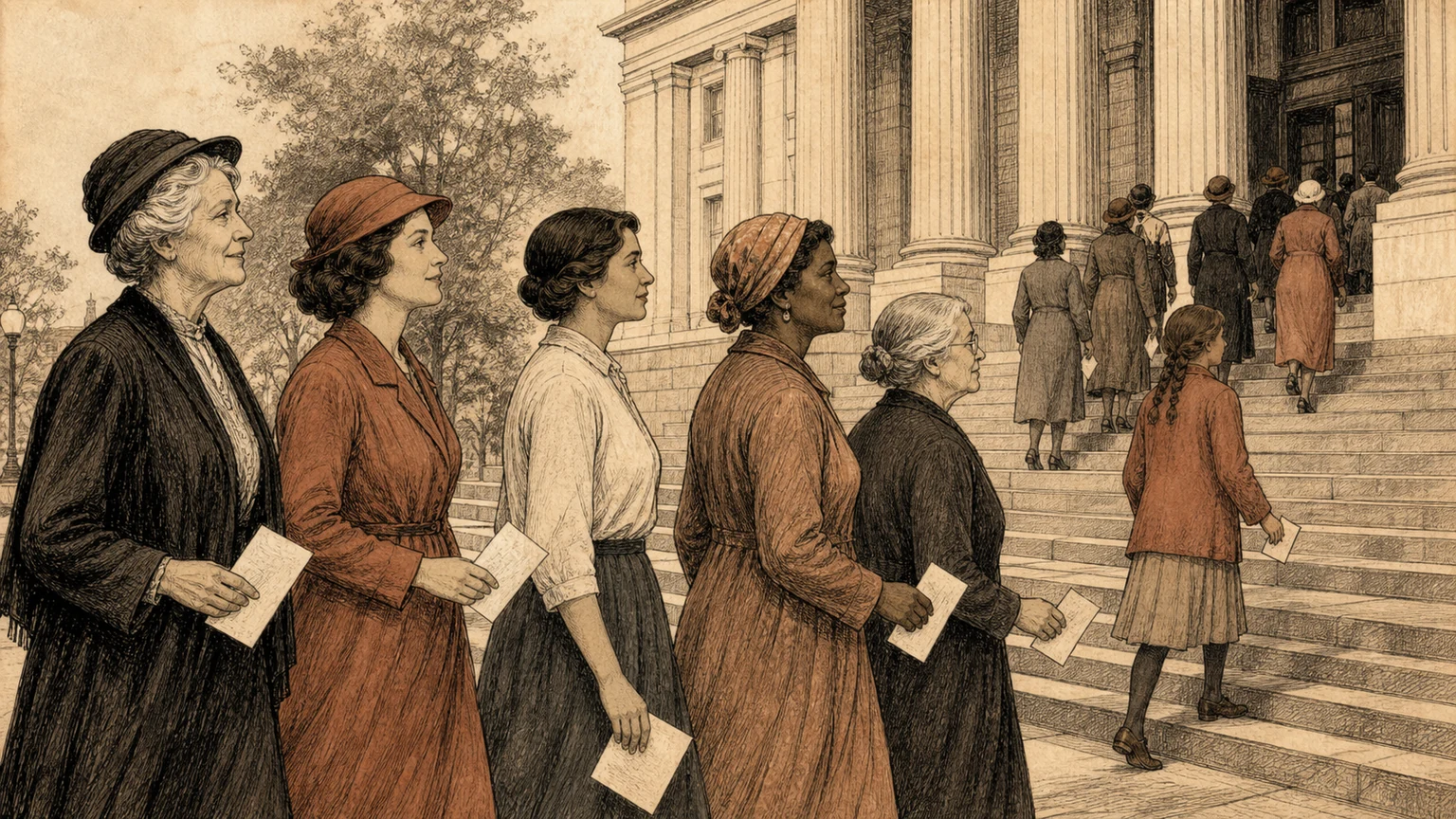
Certified
1920
The Nineteenth Amendment was formally added to the Constitution.
What it barred
Sex-based denial
States could no longer deny the vote on the basis of sex.
What remained
Other barriers
Racist laws and practices still excluded many women from voting.
Public test
Access in practice
Registration, polling places, language, and enforcement determine whether a right can be used.
A constitutional anniversary
Women’s Equality Day marks the 1920 certification of the Nineteenth Amendment, which prohibited denying the vote on the basis of sex. It was a decisive constitutional change won through decades of organizing.
The victory was not evenly delivered. Poll taxes, literacy tests, racial violence, citizenship rules, and local obstruction continued to keep many women — especially Black, Indigenous, Asian American, and Latina women — from the ballot.
The ballot beyond the amendment
Voting rights live in practical details: registration, access, district lines, language, transportation, and whether public officials enforce the law. The text matters because those systems determine who can use it.
The anniversary honors suffragists without flattening their movement into a single portrait. Its history includes coalitions and fractures, courageous organizing and exclusions that later movements had to confront.
Equality as a continuing measure
The day’s name reaches beyond voting toward equal standing in work, education, law, and public life. Those questions cannot be settled by ceremony, but an anniversary can keep them visible.
August 26 places a constitutional milestone beside the unfinished test it created: whether formal rights become ordinary, dependable practice for everyone.
More from August 26
Full edition
On this day
Munich opens the XX Olympiad
The 1972 Summer Olympics opened in Munich with an international ceremony before violence later transformed the Games’ public memory.
Full edition
Everything else on August 26
The front edition adds August 26’s other observances, birthdays, food, and games.
Calendar
Browse August
Read onward through August’s civic milestones, inventions, disasters, and unfinished claims to equality.